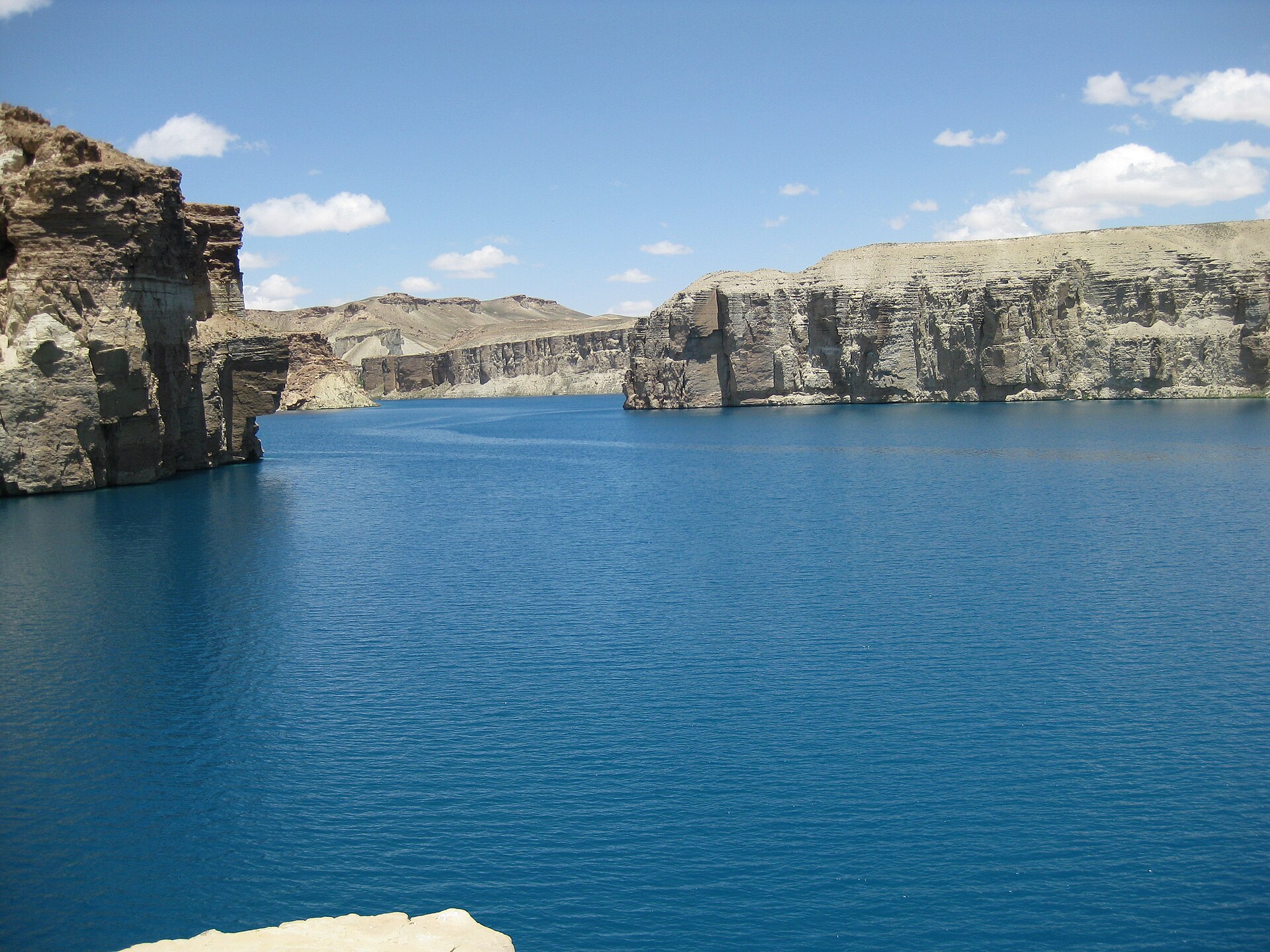
Band-e Amir is formed by a series of natural lakes held behind mineral-rich travertine dams. Their colour shifts from turquoise to deep blue against the dry, rugged landscape.
A remarkable natural system
Water moving through limestone deposits gradually built the barriers that separate the lakes. This rare geological process created a landscape that feels both dramatic and unexpectedly calm.
Band-e Amir became Afghanistan’s first national park in 2009. It remains culturally important as well as ecologically fragile, and its lakes and surrounding communities deserve careful protection.
Part of the central highlands
The lakes lie at high elevation west of Bamyan. Winters are severe, while summer brings clearer roads and a brief season of green around the water.
How the lakes were formed
Band-e Amir is a chain of high-altitude lakes held behind natural barriers of mineral-rich rock. Water moving through limestone deposits calcium carbonate over time, gradually building pale dams of travertine. Those formations separate the basins and help create the striking changes between deep blue water, light-coloured cliffs and dry surrounding slopes. The lakes are therefore not isolated attractions: they are connected parts of a sensitive water system shaped by geology, climate and seasonal flow.
A protected landscape
Afghanistan designated Band-e Amir as its first national park in 2009. Protection matters because the landscape supports wildlife, grazing communities and visitors at the same time. High elevation produces cold winters and a short summer season, while limited vegetation makes disturbed ground slow to recover. Responsible visits involve carrying waste away, avoiding damage to mineral formations, respecting local guidance and remembering that the water and pasture are part of everyday livelihoods rather than an empty wilderness.
Cultural meaning
The lakes are also places of memory, pilgrimage and family recreation. Local stories and religious associations have accumulated around them for generations. A useful account therefore holds several perspectives together: Band-e Amir is geologically unusual, nationally important and deeply connected with people who live nearby. Photographs capture its colour, but they cannot show the full rhythm of farming, herding, seasonal movement and hospitality that surrounds the park.
Further context: UNESCO’s Band-e-Amir tentative-list record.
Reading the evidence carefully
A photograph taken in bright sun can make the water appear uniformly blue, but colour changes with depth, minerals, sky and viewing angle. Winter conditions are entirely different from summer. Descriptions should therefore avoid suggesting that one image represents the park in every season.
Place names may have several accepted English spellings because Dari, Pashto and other languages use writing systems that do not map to English in only one way. Dates and attributions can also change as research develops. Afghan Desk prioritises UNESCO, institutional and scholarly reference material, labels local tradition as tradition, and avoids presenting a single photograph as a complete view.
Current access, conservation conditions and local rules may differ from the historical description here. Anyone planning travel should consult recent official advice and knowledgeable local sources. Sacred spaces, homes, farmland and working infrastructure deserve privacy and care; a meaningful visit begins with the rights of the people who use the place every day.