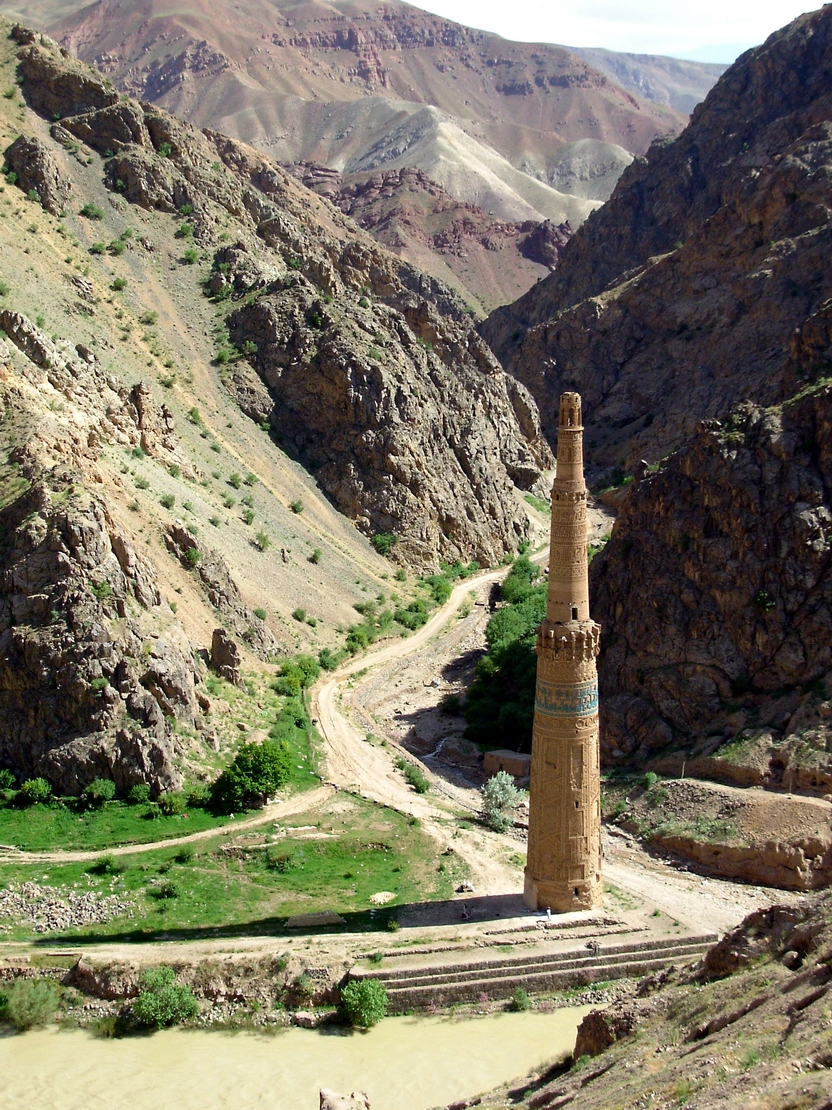
The Minaret of Jam stands more than sixty metres high at the meeting of two rivers. Its elaborate brickwork, geometric patterns and inscriptions make it one of the great surviving monuments of the Ghurid period.
Architecture in fired brick
Bands of decoration wrap around the tower, combining calligraphy with geometric and floral designs. The precision of the brickwork gives the surface a richness that changes with the light.
The minaret is often associated with the lost Ghurid city of Firuzkuh, although the exact extent and character of that settlement remain subjects of study.
A vulnerable monument
Its remote location has helped preserve the tower, but flooding, erosion and instability also threaten it. Conservation requires attention to both the structure and the river landscape around it.
A Ghurid monument
The Minaret of Jam was built in the twelfth century during the Ghurid period, when rulers based in the mountains of present-day Afghanistan governed a wide territory. Rising about 65 metres, it is remarkable for both its height and its slender construction. Bands of baked-brick decoration, geometric patterns and inscriptions wrap around the shaft, demonstrating the skill of designers and craftspeople working with a limited material palette.
The surrounding archaeological landscape
The minaret stands where the Hari Rud and Jam Rud meet, in a remote valley ringed by steep mountains. Archaeological traces nearby include fortifications, pottery and inscriptions. Scholars have connected the area with the lost Ghurid capital of Firuzkuh, although the interpretation of the wider site continues to be studied. Seeing the tower in its landscape helps explain both its visual power and the difficulty of conserving it.
Why the site is vulnerable
UNESCO inscribed Jam on the World Heritage List and the List of World Heritage in Danger in 2002. River erosion, flooding, instability, looting and the challenge of maintaining access in a remote area all create risks. Conservation is not simply a matter of repairing brickwork: it requires monitoring the leaning structure, managing water around the foundations, protecting archaeological remains and working safely with nearby communities.
Source: UNESCO World Heritage: Minaret and Archaeological Remains of Jam.
Reading the evidence carefully
The minaret’s remoteness helped keep it little known internationally, but remoteness did not make the valley uninhabited or irrelevant. Local residents have long been the people closest to the monument and essential participants in observing threats to it.
Place names may have several accepted English spellings because Dari, Pashto and other languages use writing systems that do not map to English in only one way. Dates and attributions can also change as research develops. Afghan Desk prioritises UNESCO, institutional and scholarly reference material, labels local tradition as tradition, and avoids presenting a single photograph as a complete view.
Current access, conservation conditions and local rules may differ from the historical description here. Anyone planning travel should consult recent official advice and knowledgeable local sources. Sacred spaces, homes, farmland and working infrastructure deserve privacy and care; a meaningful visit begins with the rights of the people who use the place every day.